If you run a pub, club, restaurant, shop, office or any other commercial building in England or Wales, fire safety is your legal responsibility. This guide explains in plain English what the law expects, what a fire risk assessment usually finds, and how to put the findings right. It is general guidance, not a substitute for a fire risk assessment of your own building by a competent assessor.
Who is responsible for fire safety?
The law is the Regulatory Reform (Fire Safety) Order 2005, often called the Fire Safety Order. It applies to almost every building that is not a single private home. It puts the duty on the "responsible person", which normally means the employer, the owner, the landlord or whoever controls the premises. In a shared building there can be more than one responsible person, and they must cooperate with each other.
What is a fire risk assessment?
A fire risk assessment is a structured review of your building. It looks at what could start a fire, who would be at risk, how people would be warned and how they would get out. Every responsible person must have one, and since October 2023 it must be written down in full, whatever the size of the business. It should be carried out by someone competent, kept up to date and reviewed when the building, its use or its occupants change.
The assessment ends with a list of actions, usually ranked by priority. Those actions are what you then need to close out.
What does a fire risk assessment usually find?
Most of the actions we are asked to deal with fall into three groups.
Fire doors
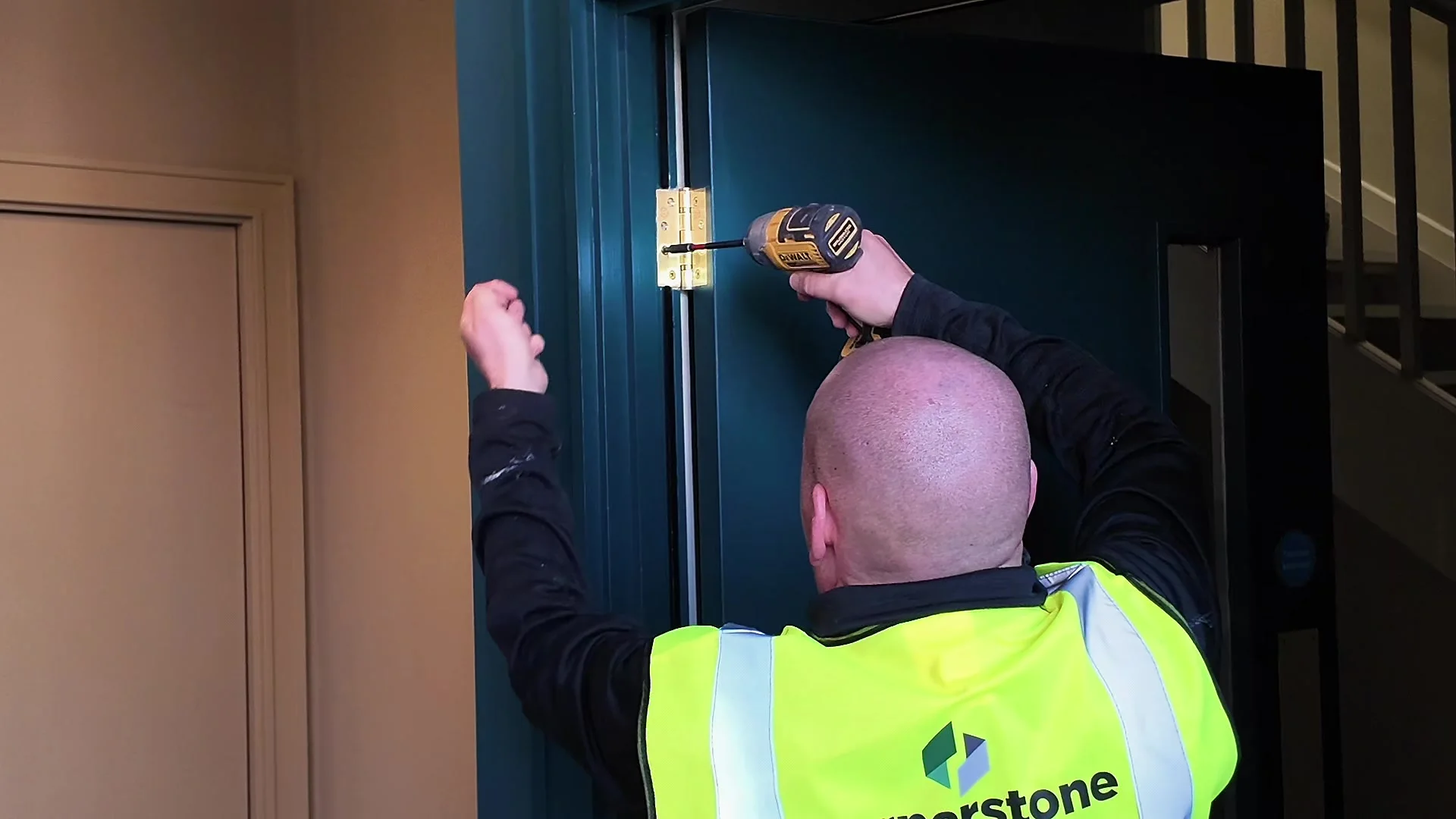
Fire doors hold back fire and smoke for a set time, commonly 30 minutes (FD30) or 60 minutes (FD60), so people can get out and the fire service can get in. They only work if every part is right. Common findings are:
- Doors that are damaged, warped or do not close fully on their own.
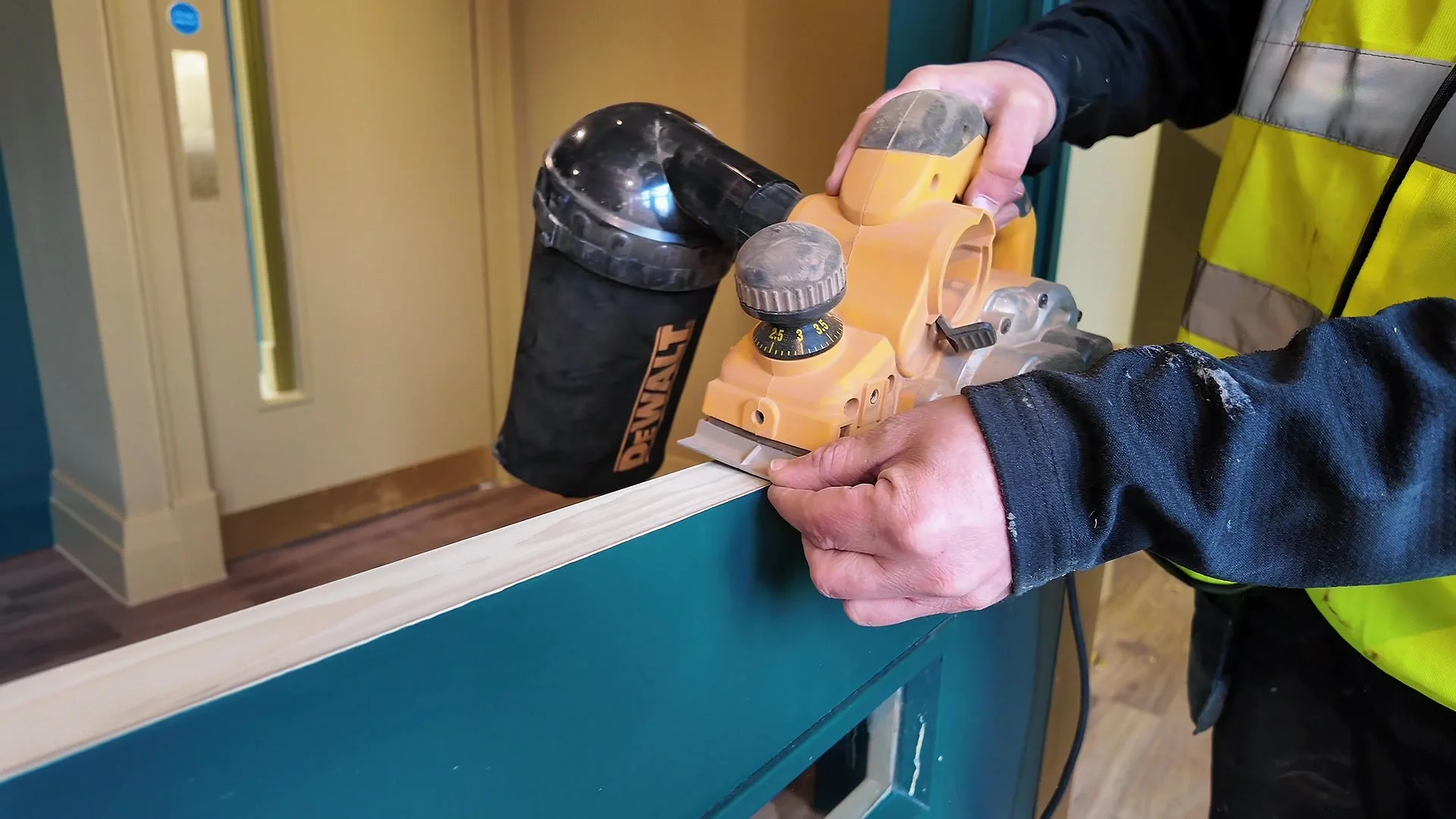
- Gaps around the door that are too large. The gap between door and frame should normally be around 3mm.
- Missing or painted-over intumescent strips and smoke seals.
- The wrong hinges, or too few. A fire door normally needs at least three fire-rated hinges.
- Missing or broken door closers, and doors wedged open.
- Glazing or ironmongery that is not fire rated.
Compartmentation
Buildings are divided into fire compartments by walls, floors and ceilings that resist fire. Over the years those barriers get breached: holes are cut for pipes, cables and ducts and never sealed, ceiling voids are left open and service risers are not fire stopped. Each gap lets fire and smoke travel into the next room or the next floor. Putting it right means finding every breach and sealing it with the correct fire-stopping products for that wall or floor.
Fire alarm and detection
Your building needs a way of detecting a fire and warning everyone in it. Assessors often find alarm systems that are faulty, out of date, do not cover the whole building or have not been tested and serviced. Fire alarm systems in commercial buildings are designed, installed and maintained to British Standard BS 5839-1. Sometimes a repair is enough. Sometimes the right answer is a full new system.
What other fire safety measures will an assessor check?
- Escape routes: clear, wide enough and never blocked or locked.
- Emergency lighting: so people can see their way out if the power fails.
- Fire exit signs: clear and correctly placed.
- Fire extinguishers: the right type, in the right place and serviced.
- Training and drills: staff who know what to do.
- Records: a log book showing tests, servicing and repairs.
How often should fire safety equipment be checked?
The usual routine for a commercial building is:
- Fire alarm: a weekly test by you, and a service by a competent engineer at least every six months.
- Emergency lighting: a short monthly test, and a full-duration test once a year.
- Fire doors: regular visual checks, with more frequent checks on doors that get heavy use.
- Extinguishers: a monthly visual check and an annual service.
- Fire risk assessment: reviewed regularly and whenever something significant changes.
Write every check down. If the fire service inspects your premises, the log book is the first thing they will ask to see.
What happens if you do not comply?
The Fire Safety Order is enforced by your local fire and rescue service. Inspectors can issue an enforcement notice setting out what you must fix and by when, or a prohibition notice that restricts or closes the premises until it is safe. Serious breaches can be prosecuted, with unlimited fines and, in the worst cases, prison sentences of up to two years. Your insurer may also refuse a claim if the building did not comply.
How do you put the findings right?
Start with the highest-priority actions in your assessment and work down. The quickest way to close them out is to use one contractor who can deal with doors, fire stopping and the alarm together, so nothing falls between trades and you have one record of what was done.
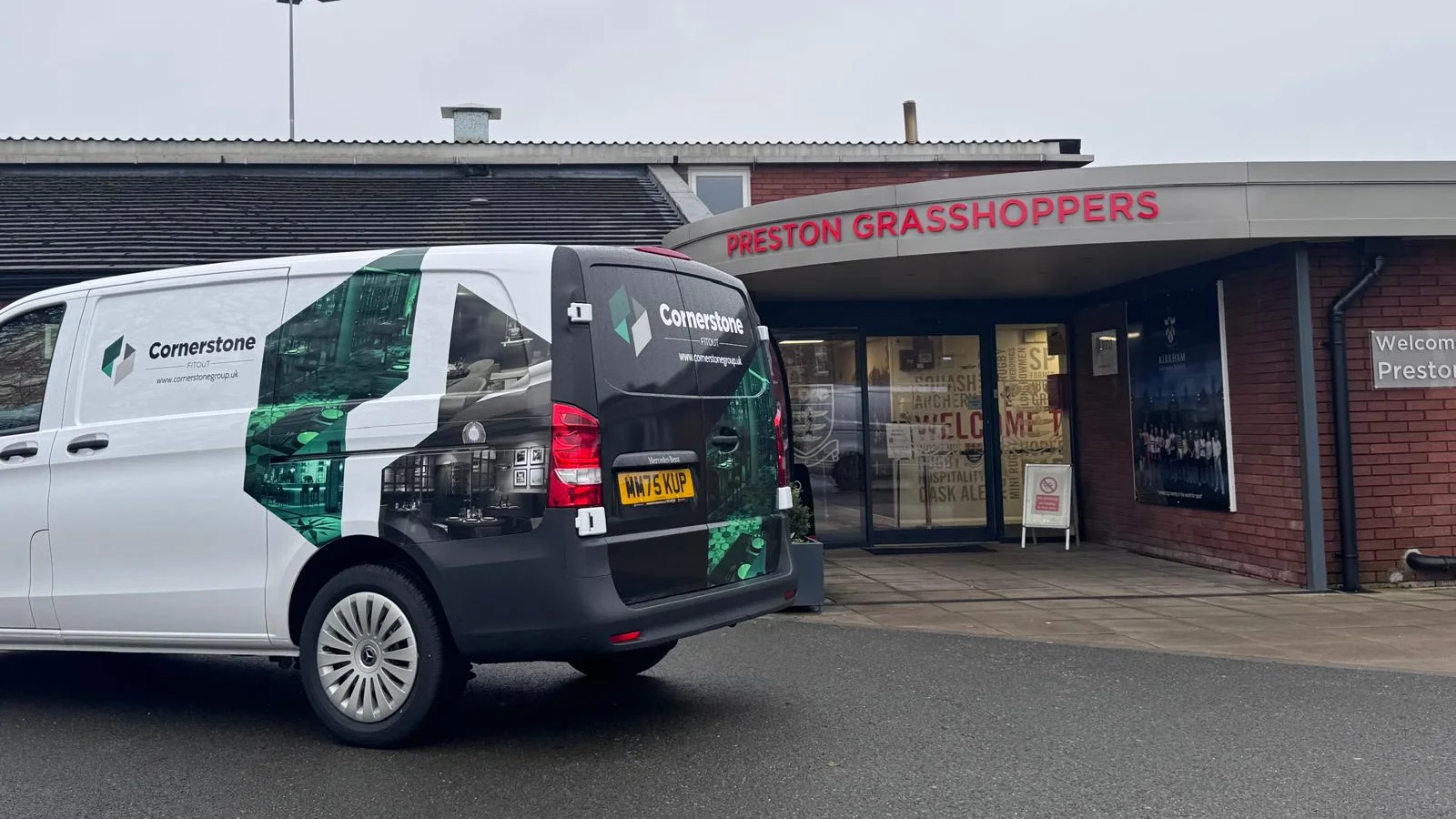
That is what we did at Preston Grasshoppers. After the club's fire risk assessment we fitted all the new fire doors, sealed the compartmentation breaches and installed a full new fire alarm system. You can read the full Preston Grasshoppers case study.
Fire doors are joinery, and joinery is what we do. Our doors are hung by our own joiners, the same team behind our bespoke joinery, and the surrounding work is managed by the people who deliver our interior fit out projects. For groups with several sites, we can roll the same remedial works out across the estate in the way we run corporate reimaging programmes.
Had a fire risk assessment?
Send us the report. We will price the fire doors, compartmentation and fire alarm work and close out the actions for you. Call us free on 0800 011 9758, Monday to Friday 8am to 5pm, or send us your brief and you will get a considered reply within one working day.
This guide covers England and Wales and reflects the rules as we understand them in October 2026. Scotland and Northern Ireland have their own legislation. Always follow the advice of your fire risk assessor and your local fire and rescue service.